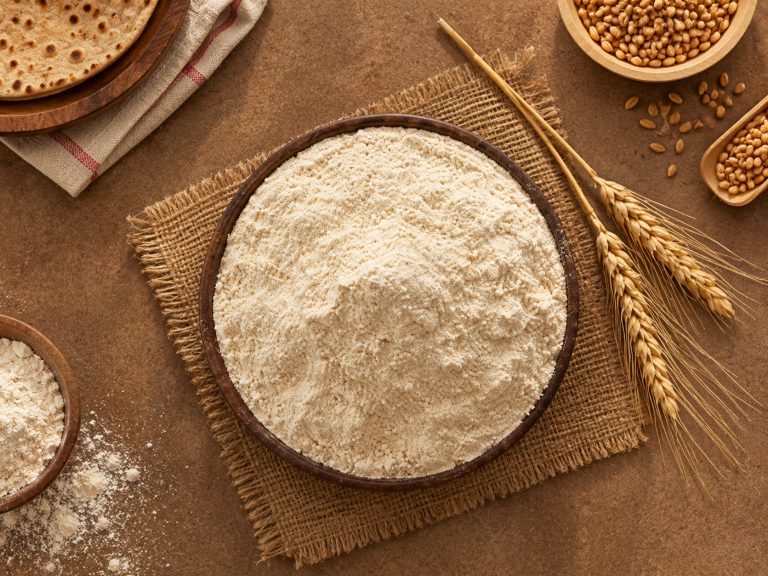
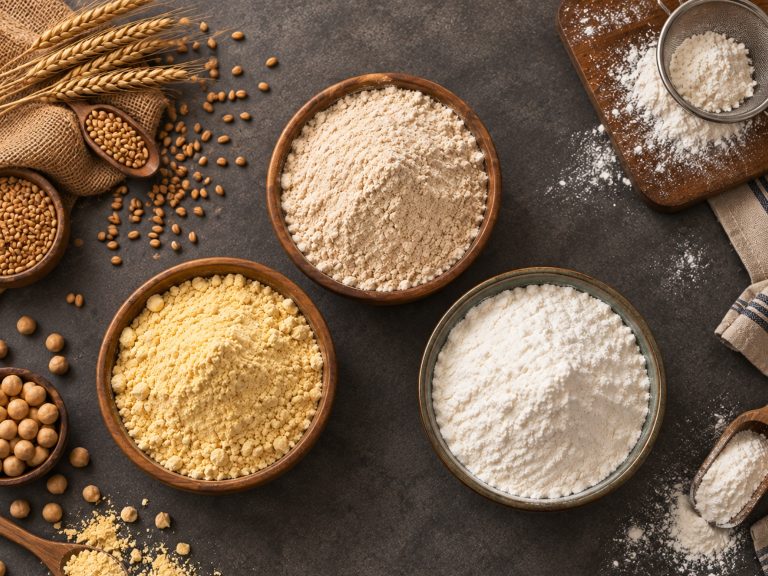
Chakki Atta vs Regular Atta: What’s the Difference?
Discover how stone-ground chakki atta differs from roller-milled regular atta in texture, nutrient retention, and making softer rotis.
Hold two bags of flour side by side. One says “chakki atta” on the label. The other says “whole wheat flour.” They look similar through the packaging, roughly the same color, roughly the same weight. But press them between your fingers, and the difference starts to show. One feels silky and even. The other has a faint grittiness, a texture that crumbles slightly before it catches.
That difference is not in the wheat. It is in the mill.
Chakki atta and regular atta start from the same grain, but the way they are ground changes everything: how the flour feels in dough, how the roti tastes, how the nutrients survive the journey from kernel to kitchen. Understanding these flour differences helps you choose the right one for your table.
How Stone Ground Flour Is Made
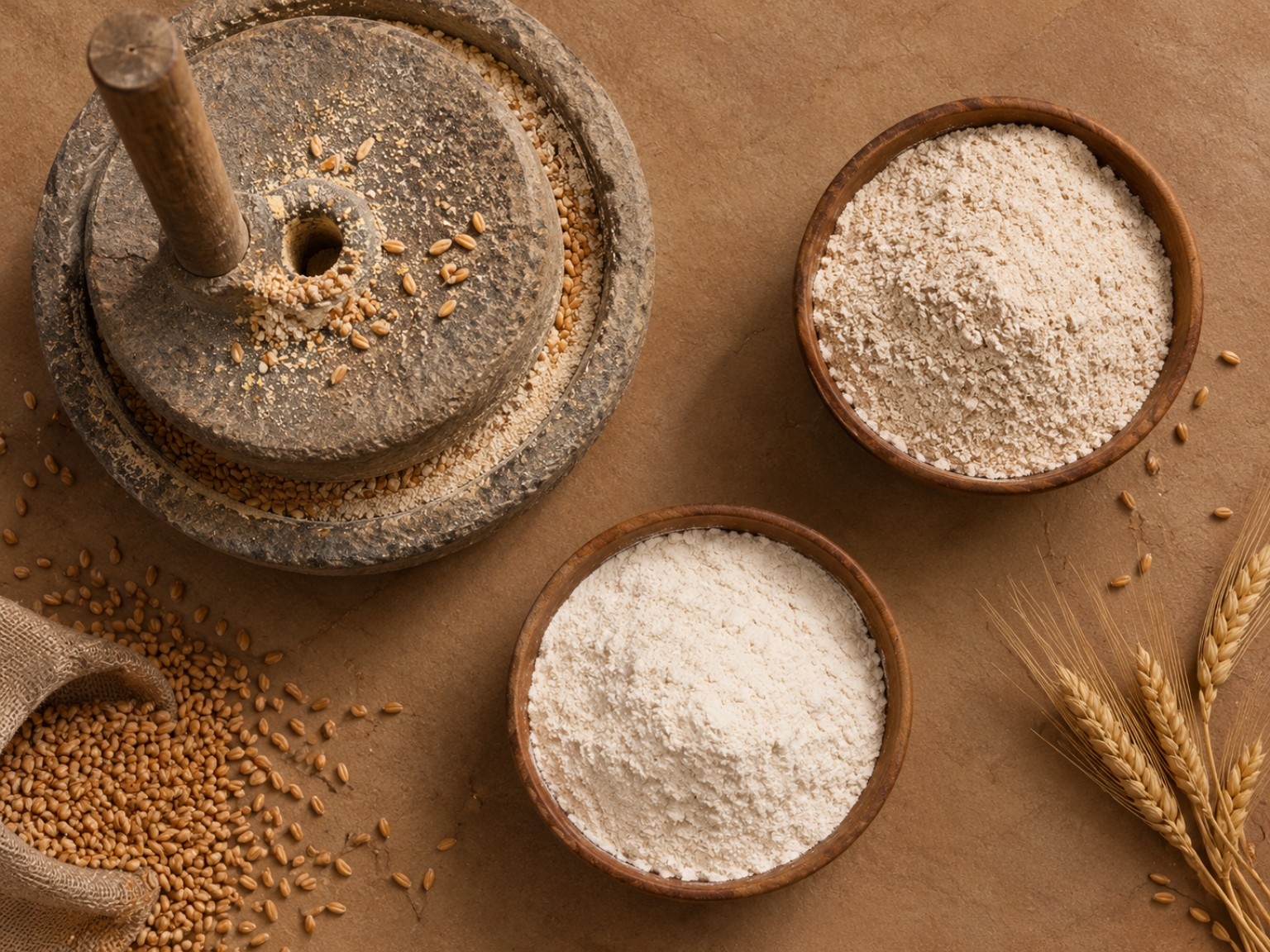
The word “chakki” refers to a stone disc mill, a pair of heavy circular stones that turn slowly against each other, crushing whole wheat kernels into flour. This is the method that Indian households and neighborhood mills have used for centuries.
In a chakki, the bran, germ, and endosperm are ground together in a single pass. Because the stones turn slowly and generate minimal heat, the natural oils in the wheat germ stay intact, carrying the fresh, nutty aroma that stone-ground flour is known for.
The flour that comes off a chakki is fine, even, and slightly warm to the touch. It smells like fresh wheat, with a faint sweetness you can almost taste before you have added a drop of water. This is whole wheat atta at its most traditional: every part of the grain, perfectly integrated.
For a chakki flour that follows this exact method, Royal® Chakki Atta Wheat Flour is stone ground from whole wheat, preserving the bran, germ, and endosperm in every bag.
How Regular Atta Is Milled Differently
Regular atta is produced in steel roller mills, the industrial method that dominates commercial flour production worldwide. The process is fast and high-volume. Steel rollers spin at high speed, separating the wheat kernel into its components: endosperm first, then bran and germ added back.
That separation and recombination is the key difference. When the bran is stripped and reintroduced, it does not distribute as evenly as it would in stone grinding. The result is a flour with a slightly grittier texture, visible flecks of bran, and a less uniform consistency.
The faster, hotter process can also dull some of the wheat’s natural aroma. This does not make regular atta nutritionally empty, but it does mean the flour loses some of the subtleties that stone grinding preserves: the nutty aroma, the smooth dough feel, the gentle wheat flavor in a finished roti.
Side-by-Side: Where Chakki Atta and Regular Atta Differ
The wheat flour comparison becomes clearest in three areas.
| Feature | Chakki Atta | Regular Atta |
|---|---|---|
| Milling method | Slow stone grinding (low heat) | High-speed steel rollers (higher heat) |
| Texture | Silky, fine, even | Slightly coarser, visible bran flecks |
| Nutrient profile | Whole wheat (bran and germ retained) | Whole wheat (bran and germ recombined) |
| Dough behavior | Absorbs water evenly, soft and pliable | May need more kneading to reach softness |
| Roti outcome | Softer, puffs more consistently | Slightly denser, less uniform puff |
| Shelf life | Shorter (natural oils can oxidize) | Longer (reduced oil content) |
One trade-off worth noting: because chakki atta retains more of the wheat germ’s natural oils, it has a shorter shelf life. Store it in an airtight container in a cool, dry place, and it will stay fresh.
What the Difference Means in Your Kitchen
Where this wheat flour comparison really matters is in the dough and on the tawa.
Chakki atta absorbs water more evenly, which means the dough comes together faster and feels softer under your palms. When you roll out a roti, the sheet stretches thin without tearing. On a hot tawa, the moisture distribution helps the roti puff, that satisfying balloon of steam that signals a perfectly cooked flatbread.
Regular atta can achieve good results too, but it often needs more water and more kneading time to reach the same pliability. The rotis may be slightly denser, and the puff can be less predictable.
For paratha, where layers of ghee get folded into the dough, the smooth consistency of stone-ground flour creates cleaner separations between layers. The result is flakier, more golden, with each bite carrying that warm wheat flavor.
Pair those parathas with Royal Masoor Dal for a simple meal that feels like much more than the sum of its parts. Or serve soft rotis alongside Royal Toor Dal or Royal Moong Dal, where the gentle flavor of the flatbread lets the lentils take center stage.
If roti, paratha, and puri are the backbone of your meals, chakki atta is the better fit. The smoother texture, fuller flavor, and better nutrient retention make a noticeable difference when flour is something you use every single day. Regular atta still has its place, particularly in recipes where texture precision matters less or where the flour is combined with other ingredients. But for the flatbreads that anchor an Indian meal, stone-ground flour is what generations of home cooks have trusted, and the reason is simple: you can taste it.
Stock your kitchen with Royal Chakki Atta and taste the difference stone-ground flour makes in every roti, paratha, and puri.
Frequently Asked Questions
Is chakki atta healthier than regular atta?
Chakki atta is made from the whole wheat kernel, so it retains the bran and germ that contribute fiber, vitamins, minerals, and natural wheat lipids. That whole-kernel composition, rather than the milling method alone, is what gives whole wheat atta from a chakki its fairly complete nutritional profile.
Why can chakki atta produce soft rotis?
Stone-ground flour has a finer, more even consistency that absorbs water uniformly. This produces a smoother dough that rolls thinner and puffs more consistently on the tawa, resulting in softer, lighter rotis.
Does stone ground flour go bad faster?
Yes. Because chakki atta retains the natural oils from the wheat germ, it can oxidize over time. Store it in an airtight container in a cool, dry place, and use it within a reasonable window after opening.
Can I use regular atta for paratha and puri?
You can, but the results may differ. Regular atta produces slightly denser dough with less even layering. For the flakiest parathas and the lightest puris, chakki atta is the preferred choice.