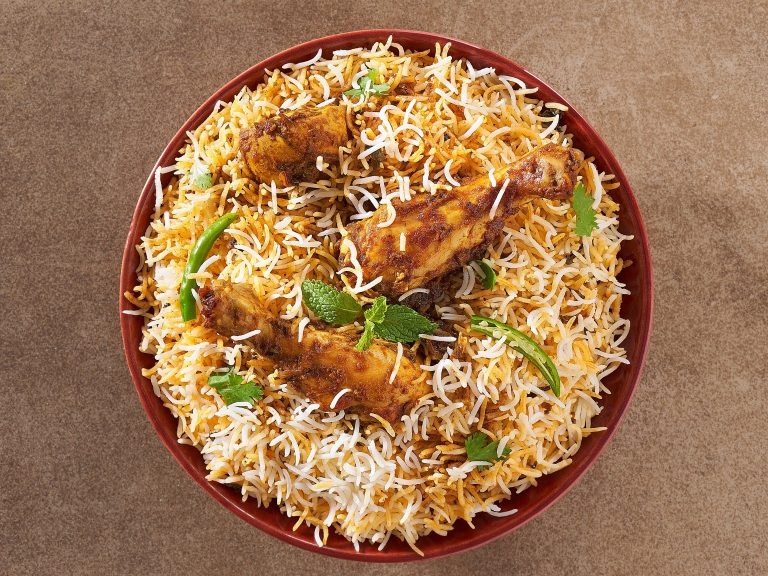
Lucknowi vs Hyderabadi Biryani: What’s the Difference?
Hyderabadi biryani is bold, spicy, and cooked raw (kacchi) with rice. Lucknowi biryani is delicate, aromatic, and uses cooked meat (pakki) layered with rice for a lighter finish.
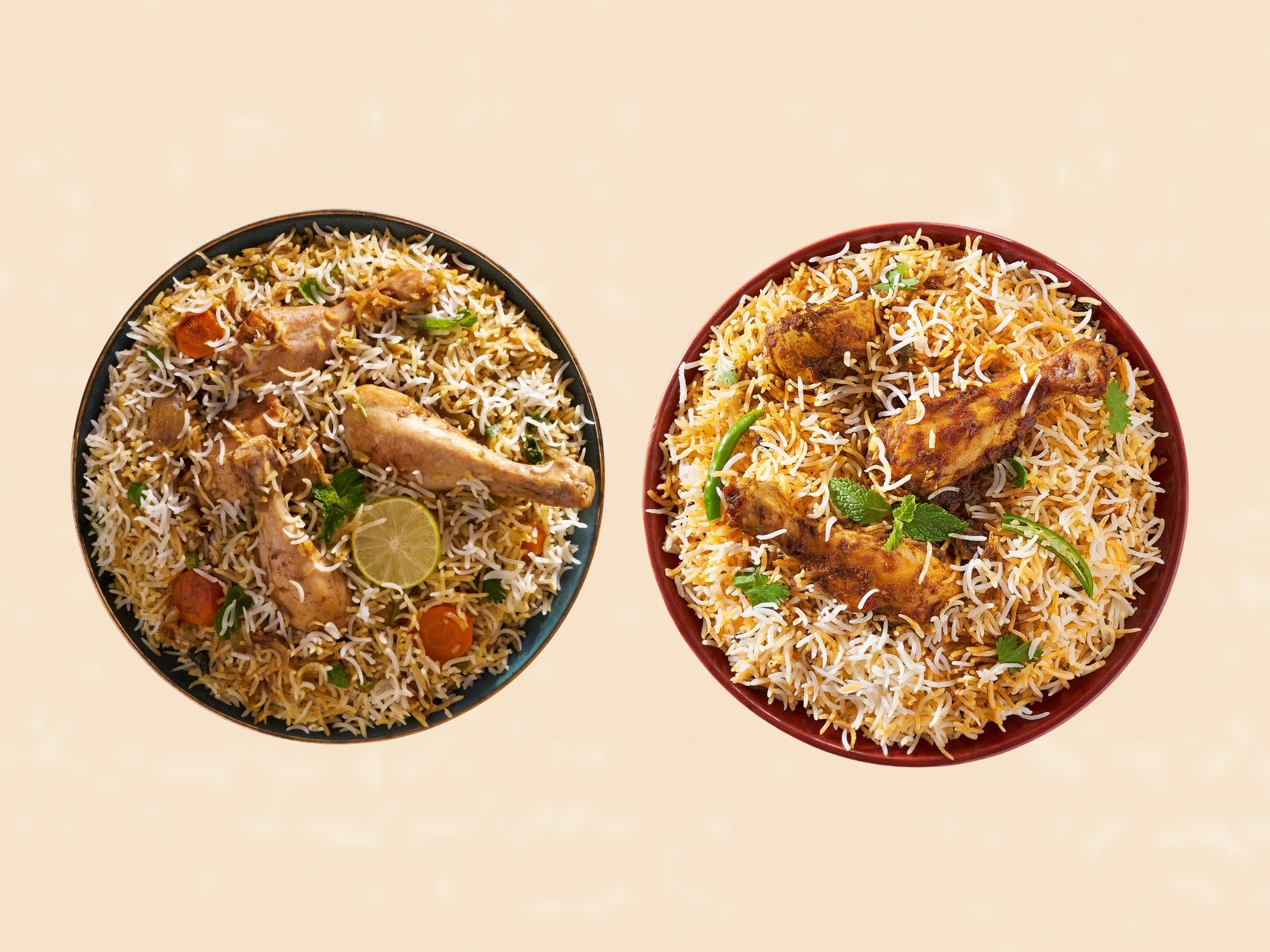
Two pots of biryani can look almost like twins and taste like strangers. Set a Hyderabadi biryani next to a Lucknowi one and the differences begin at the very first step, long before the lid is sealed. One is built for boldness, the other for elegance, and they were influenced by Persian/Mughal culinary traditions.
Two Cities, Two Traditions
Both biryanis descend from the same Mughal roots, but the cities that raised them pulled in very different directions.
Hyderabadi Roots
Hyderabadi biryani grew up in the kitchens of the Nizams of Hyderabad, in the Deccan of southern India. That lineage gave it a bold, fiery character, with generous chili, tang, and layered spice. The result is biryani as a statement, rich and assertive from the very first bite. Little about it is subtle, and that is the point.
Lucknowi (Awadhi) Roots
Lucknowi biryani, also called Awadhi biryani, comes from the Nawabs of Awadh in Lucknow, in northern India. That court prized refinement, and its kitchens perfected dum pukht, the art of slow, sealed steam cooking. The resulting style is delicate, perfumed, and deliberately gentle.
Kacchi vs Pakki: The Real Difference
The clearest split between the two is technique, specifically how the meat meets the rice. Two methods, two very different results.
Hyderabadi: The Kacchi Method
Hyderabadi biryani is classically kacchi, meaning raw. Raw marinated meat is layered directly beneath partly cooked Basmati rice, then sealed and slow-cooked together over dum. The rice drinks up the meat’s juices and spice as everything finishes at once, which builds that deep, unified flavor. A long-grain aged Basmati rice is ideal, since it has to hold up through the full cook.
For a big-batch pot, an extra-long Golden Sella Basmati rice stays firm without turning soft.
Lucknowi: The Pakki Method
Lucknowi biryani is pakki, meaning cooked. The meat is simmered separately, often in a spiced stock called yakhni, and the rice is par-cooked on its own before the two are layered and gently steamed. That extra control keeps the grains pale, separate, and fragrant.
A parboiled Sella Basmati rice suits this delicate layering especially well.
How They Taste and Cook Differently
Same Basmati, same dum finish, yet the two land in completely different places. The contrast shows up in the spice, the aroma, and the rice itself.
Spice and Heat
Hyderabadi biryani leans hot and robust, with red chili, whole spices, and ingredients like stone flower lending a smoky depth.
Lucknowi biryani pulls back, using warm aromatics in careful measure so nothing overpowers. One hits you up front; the other unfolds slowly across the meal.
Aroma and Aromatics
Lucknowi leans on saffron, kewra, and rose for a soft, floral perfume.
Hyderabadi builds a bolder bouquet from mint, fried onions, and toasted spice. Both are deeply fragrant, but one whispers while the other announces itself across the room.
The Rice and the Occasion
Both rely on long-grain Basmati, though Hyderabadi carries more moisture and richness while Lucknowi stays light and separate. For a fast route to either, a Hyderabadi biryani kit or a Lucknowi biryani kit brings the right spices already measured. Either way, aromatic long-grain Basmati is non-negotiable, since the dish lives or dies on the quality of the rice. Reach for lamb or chicken, whichever you prefer.
Hyderabadi vs Lucknowi at a Glance
The two traditions side by side.
| Features | Hyderabadi | Lucknowi (Awadhi) |
|---|---|---|
| Origin | Nizams of Hyderabad, southern India | Nawabs of Awadh, Lucknow, northern India |
| Method | Kacchi, raw meat cooked with rice | Pakki, meat cooked first, then layered |
| Flavor | Bold, spicy, tangy | Subtle, aromatic, delicate |
| Aromatics | Chili, mint, stone flower | Saffron, kewra, rose |
| Rice | Rich, moist, layered | Pale, light, separate |
Two Answers to the Same Question
So which biryani wins? Neither, really. Hyderabadi is the one to reach for when you want heat, drama, and a plate that announces itself. Lucknowi is for evenings that call for restraint, fragrance, and quiet elegance. Both are answers to the same question, shaped by two proud culinary courts.
The best way to really know the difference is to cook both and taste them side by side. Whichever you start with, the right long-grain Basmati is what carries the dish.
Ready to fire up the handi? Reach for the full Royal® collection and cook your way through both traditions.
Frequently Asked Questions
What is the main difference between Hyderabadi and Lucknowi biryani?
Hyderabadi biryani is bold and spicy and usually cooked kacchi, with raw marinated meat layered under rice. Lucknowi (Awadhi) biryani is milder and aromatic, cooked pakki, with the meat prepared separately first.
What do kacchi and pakki biryani mean?
Kacchi means raw marinated meat is cooked together with the rice under dum. Pakki means the meat is cooked first, then layered with par-cooked rice and steamed. Hyderabadi is typically kacchi; Lucknowi is pakki.
Is Lucknowi biryani the same as Awadhi biryani?
Yes. Lucknowi biryani and Awadhi biryani are the same dish, named for Lucknow and the wider Awadh region, known for refined, subtle dum pukht cooking.
Which biryani is spicier?
Hyderabadi biryani is the spicier of the two, and it generally tends to be more assertively spiced. It is built on red chili, robust spices, and tangy notes. Lucknowi biryani is gentler and more fragrant, focused on delicate aromatics.
What rice is best for biryani?
Long-grain Basmati is the standard for both styles. Aged Basmati keeps its shape in a kacchi cook, while parboiled Sella Basmati stays firm and separate for a pakki layering.
Which biryani should a beginner try first?
The pakki method behind Lucknowi biryani is more forgiving, since the meat is already cooked before layering. Kacchi Hyderabadi biryani needs more precise timing to get right.